

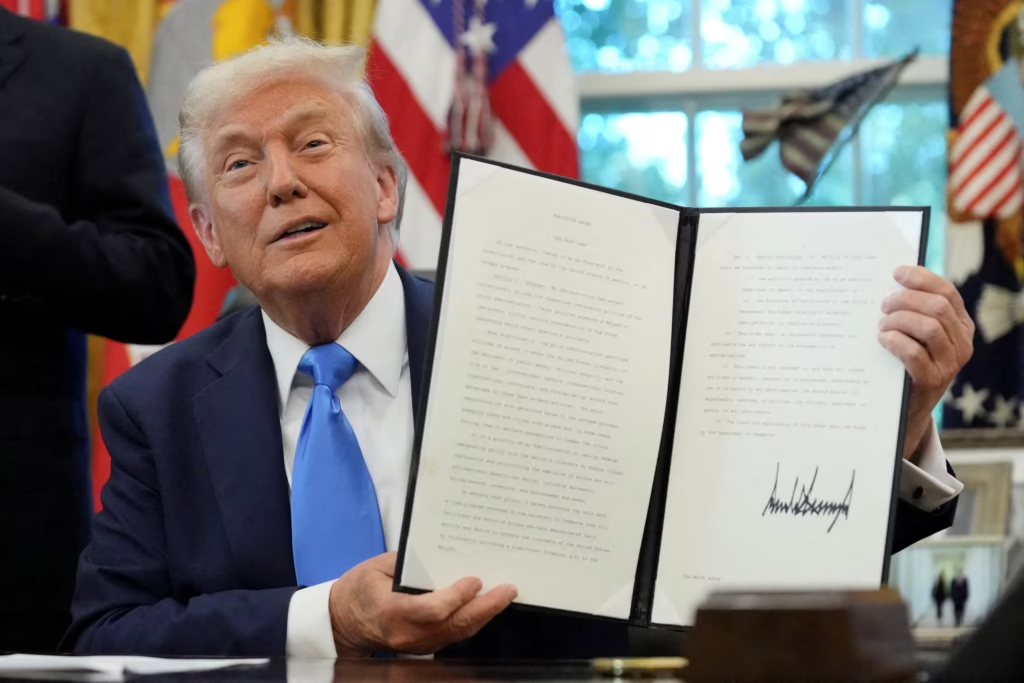
The Trump administration will soon require companies to pay $100,000 per year for each H-1B visa. The sudden change has already prompted Microsoft, JPMorgan, and Amazon to warn visa holders to stay inside the U.S. or return quickly.
Tech Industry Hit Hard
The technology sector depends heavily on global talent. More than 70% of H-1B visas go to workers from India, with China a distant second. Many U.S. firms rely on these skilled employees for roles in software, engineering, and research.
Analysts warn the steep fee could push companies to move high-value work overseas. That shift could weaken the U.S. position in fast-growing fields such as artificial intelligence. Critics say the plan may raise money in the short term but cost America its edge in the long run.
Company Responses
Microsoft and JPMorgan told their foreign employees to avoid travel until the government issues new guidance. Firms with a heavy reliance on H-1B visas saw their stocks drop. Cognizant, Infosys, and Wipro shares each fell between 2% and 5% after the announcement.
Immigration Crackdown
The visa fee hike is part of Trump’s wider immigration push. Commerce Secretary Howard Lutnick defended the change. “If you train someone, train a graduate from one of our universities. Stop importing people to take our jobs,” he said.
The H-1B program grants 65,000 visas each year, plus 20,000 more for advanced degree holders. Until now, employers paid only a few thousand dollars in processing fees.
Support and Criticism
Venture capital firms warn the new costs will drive away global talent. “If the U.S. stops attracting the best minds, it risks losing its ability to innovate,” said Deedy Das of Menlo Ventures.
Some, like Tesla CEO Elon Musk, defend the visa program. They argue it fills talent gaps and fuels innovation. Musk himself once held an H-1B before becoming a U.S. citizen.
What Comes Next
Officials say the visa will cost $100,000 a year for three years, but the details remain unclear. Immigration experts question whether such fees are legal. Lawsuits are likely if the policy moves forward.
Resources:
https://www.reuters.com/
https://knowledgenexuses.com/