
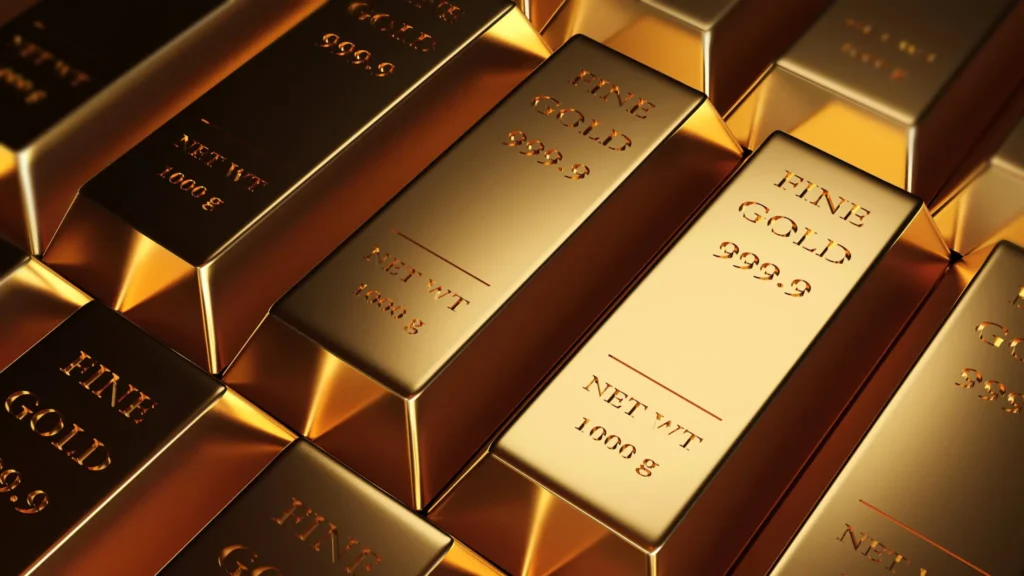
Gold prices broke new ground this week, surging past $3,870 an ounce for the first time in history. The rally marks one of the most dramatic moves in the precious metals market in over a decade. Although prices slipped slightly to $3,845 later in the session due to profit-taking, the metal remains on track for a 10% monthly gain and an impressive 16% jump in the third quarter.
This historic rally is fueled by a potent mix of economic uncertainty, geopolitical tensions, Federal Reserve rate cuts, and strong safe-haven demand—factors that have turned gold into one of 2025’s most sought-after assets.
🌍 Why Gold Is Soaring: Key Drivers Behind the Record
Several global forces have converged to push gold to these unprecedented levels:
1. US Economic Uncertainty and Federal Reserve Policy
Investors are betting heavily on continued monetary easing. After several rate cuts this year, markets are pricing in a 90% chance of another Fed rate cut in October and a 65% probability of a second move in December. Lower interest rates make non-yielding assets like gold more attractive relative to bonds or cash.
At the same time, questions about the resilience of the US economy are growing. Inflation remains above target, and growth indicators are softening. This combination has sent investors searching for stability in tangible assets.
2. Geopolitical Conflicts and Safe-Haven Demand
Global conflicts continue to escalate. Ongoing wars in Ukraine–Russia and Israel–Hamas are fueling risk aversion worldwide. Whenever global tensions rise, gold historically acts as a safe-haven asset, protecting wealth during volatile periods.
This time is no different. Institutions and retail investors alike are pouring into bullion to hedge against political instability and unpredictable markets.
3. Chinese Investor Behavior and Golden Week
Interestingly, part of Tuesday’s price dip was linked to Chinese investors reducing exposure ahead of the Golden Week holiday. Many traders opted to lock in profits before the week-long break, briefly cooling the rally.
Still, Chinese demand remains structurally strong. As the world’s top gold consumer, China continues to play a decisive role in global pricing trends.
4. US Government Shutdown Fears
A looming US government shutdown is adding fuel to the fire. Political gridlock in Washington is rattling markets. Investors worry that prolonged disruptions could impact government spending, credit ratings, and broader financial stability. This uncertainty is pushing more capital toward gold as a defensive asset.
📈 Historical Context: The Biggest Annual Gain Since 1979
Gold’s 47% year-to-date surge puts it on track for its strongest annual performance since 1979, when inflation and geopolitical shocks drove prices to record levels. Back then, gold was seen as a hedge against runaway prices and political instability—parallels that feel strikingly familiar today.

🌐 Market Impact and Investor Behavior
The rally has been broad-based.
- Institutional investors are rebalancing portfolios toward commodities.
- Central banks, including those in China, Russia, and India, are accumulating reserves steadily.
- Retail investors are buying coins, bars, and gold-backed ETFs at record rates.
Meanwhile, other metals have shown mixed performance. Silver has climbed 48% year-on-year, while platinum has gained over 60%. Industrial metals like steel and lithium have lagged due to weaker manufacturing demand.
⚠️ Risks to Watch: Could the Rally Reverse?
While sentiment remains bullish, there are potential headwinds:
- A stronger US dollar could cap further gains.
- If the Federal Reserve pauses or reverses rate cuts, gold’s appeal might soften.
- A short-term correction could occur if profit-taking accelerates or if geopolitical tensions ease unexpectedly.
That said, most analysts view any dip as a buying opportunity rather than a trend reversal.
🧭 The Road Ahead: Strategic Outlook
Looking forward, gold’s trajectory will hinge on three key factors:
- Federal Reserve policy decisions over the next two quarters.
- Geopolitical developments, especially in Eastern Europe and the Middle East.
- Chinese consumer demand during the post–Golden Week period.
If inflation stays elevated and geopolitical tensions persist, gold could surpass $4,000 per ounce before the end of 2025. Some analysts even predict higher targets if central banks maintain their aggressive buying programs.
📝 Bottom Line
Gold’s rise to $3,870 an ounce isn’t just another market milestone—it reflects deep structural shifts in the global economy. Investors are seeking stability in an era of volatile politics, economic uncertainty, and monetary easing.
Whether you’re a seasoned investor or simply watching from the sidelines, the gold rally is a reminder of how powerful safe-haven assets can become during turbulent times.
Resources:
https://x.com/
https://goldprice.org/
https://knowledgenexuses.com/