
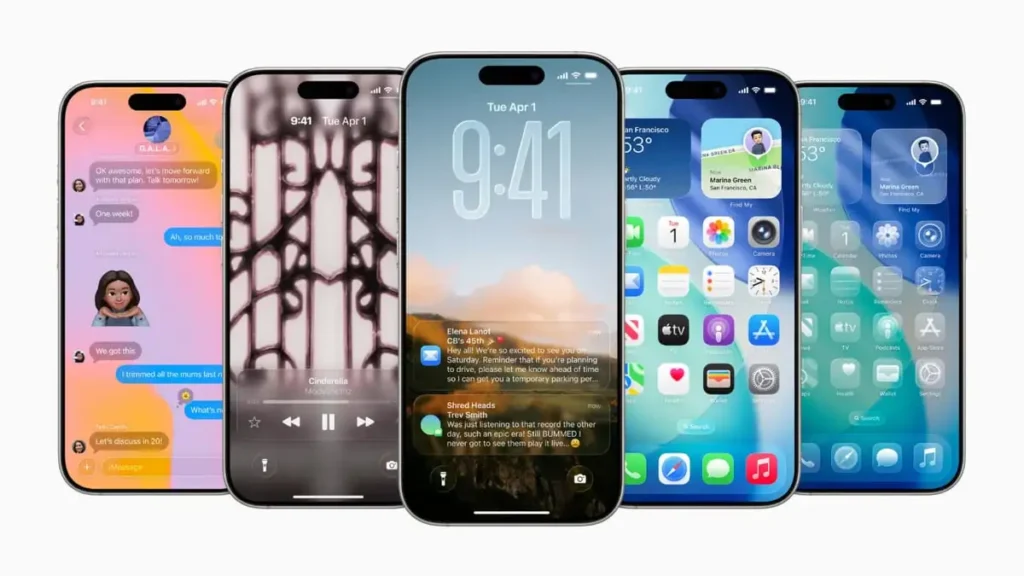
Apple used its annual Worldwide Developers Conference (WWDC) to spotlight design, debuting a new interface called Liquid Glass. Unlike past updates centered on software breakthroughs, this year’s event leaned heavily on aesthetics and usability.
A Unified Look Across Devices
Liquid Glass will appear across Apple’s core platforms—iOS, macOS, iPadOS, and watchOS—marking the company’s broadest design update to date. Alan Dye, Apple’s design chief, called it the most sweeping interface refresh Apple has ever introduced.
Inspired by visionOS, the interface creates a translucent, glass-like layer that reacts to touch and movement. Windows jiggle when dragged, icons appear multi-layered, and UI elements refract light like real glass. Apple says this makes devices feel more alive and dynamic. The new design also adapts to light, dark, and clear modes, adding depth while keeping the interface functional.
What’s Changing
Beyond the new design language, Apple announced several system-wide tweaks:
- Control Center, lock screen, and notifications have been reworked for cleaner symmetry.
- App icons now use layered Liquid Glass effects for a three-dimensional look.
- MacOS 26 Tahoe introduces a transparent menu bar and tighter integration with the iPhone’s Phone app.
- iPadOS gains a menu bar for easier multitasking, making it more office-friendly.
- watchOS 26 adds a Workout “Buddy” powered by AI for personalized fitness tracking.
For gaming, Apple said its Vision Pro headset will now support Sony’s PlayStation VR controllers. Persona avatars in visionOS will also look more realistic during video calls.
AI Takes a Back Seat—For Now
Although AI featured at the event, it wasn’t the main story. Apple confirmed it will let outside developers build apps with its AI models. It also showcased new translation tools, smarter maps, and image-generation features developed with OpenAI.
Still, Apple trails rivals in AI innovation. Last year’s Apple Intelligence rollout stumbled, and larger AI upgrades are not expected until 2026. In the meantime, partnerships with companies like OpenAI are helping Apple fill gaps.
Rebranding the OS Lineup
In a symbolic move, Apple is renaming its operating systems by year rather than version numbers. The next generation will be iOS 26, macOS 26, iPadOS 26, and watchOS 26. Beta versions are available to developers now, with a public beta in July and full rollout this fall.
Market and Industry Impact
The design focus did little to excite Wall Street. Apple’s stock fell as much as 1.9% during the event before rebounding. Shares are already down 19% this year, costing Apple its spot as the world’s most valuable company.
Industry watchers noted that Apple is likely to raise device prices as it faces tariffs and production shifts to India. The new software could help drive upgrades by making older devices feel outdated.
Why It Matters
Liquid Glass is Apple’s first major design overhaul since iOS 7 in 2013. The interface reflects Apple’s belief that design itself—how software looks, moves, and feels—remains central to its brand. While AI breakthroughs may come later, this update shows Apple doubling down on visual polish and user experience to keep its ecosystem attractive.
Resources:
https://daily.dev/
https://knowledgenexuses.com/