

Air travel usually follows a predictable routine: airports look alike, safety announcements sound the same, and runways are long strips of asphalt stretching into the horizon. But in some corners of the globe, airport runways break the mold—blending with beaches, golf courses, and even islands. Here’s a tour of some of the world’s most extraordinary airstrips.
Barra Airport, Scotland (BRR)
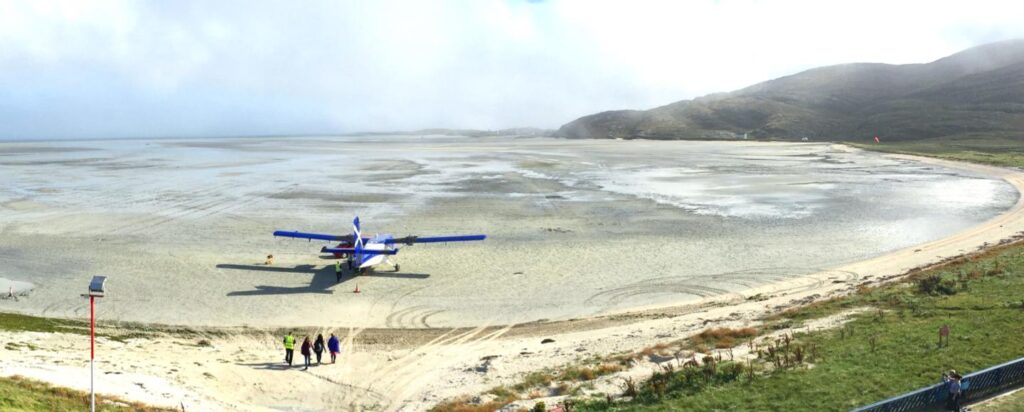
In the Outer Hebrides, Barra Airport offers an experience like no other: planes land directly on the sand. Traigh Mhòr, a wide beach on the north of the island, doubles as a runway, and flights are timed with the tides. Only one route operates—Loganair’s 140-mile hop to Glasgow on a 19-seater Twin Otter. Passengers walk across the sand to reach the terminal, giving this tiny airport a truly unique charm.
Hong Kong International Airport (HKG)
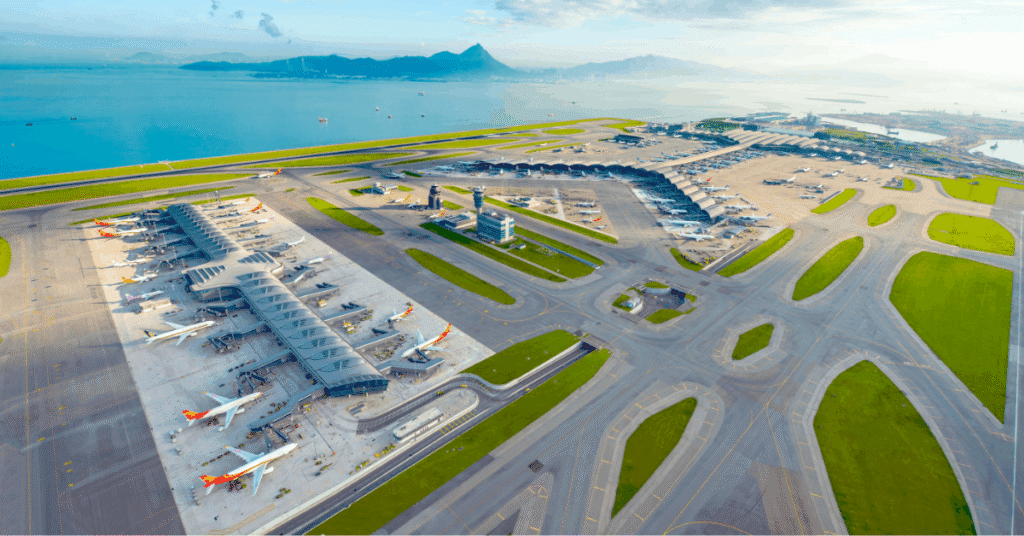
Built on reclaimed land, Hong Kong International sits on the islet of Chek Lap Kok, quadrupled in size to accommodate two runways and the world’s largest passenger terminal when it opened in 1998. Travelers cross the 1.4-mile Tsing Ma bridge, the longest road-and-rail suspension bridge at the time, before reaching the airport’s glassy terminals designed to withstand typhoons.
Don Mueang International Airport, Thailand (DMK)
Bangkok’s historic Don Mueang Airport features an 18-hole golf course right between its two runways. Golfers pass through security before teeing off and must watch for landing planes, guided by a red light warning system. Though mostly used by budget airlines today, the airport occasionally hosts large aircraft like the Emirates A380 for special landings.

Sumburgh Airport, Scotland (LSI)
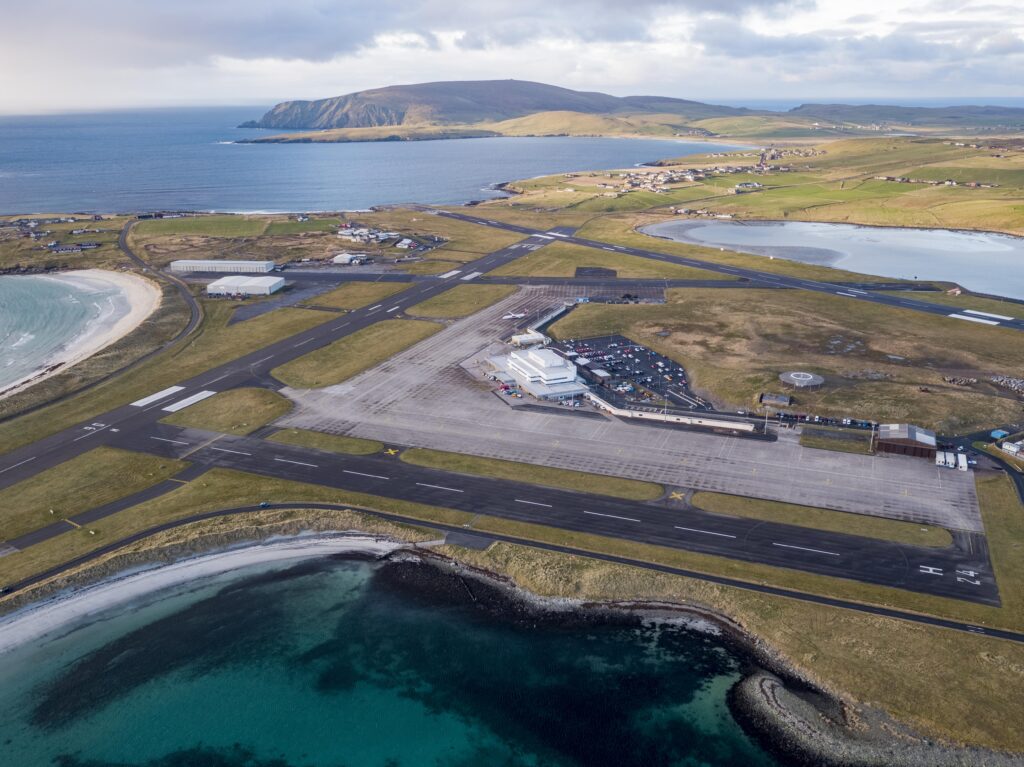
In Shetland, the road to the Bronze Age ruins of Jarlshof cuts across one of Sumburgh Airport’s runways. A barrier is lowered before take-offs and landings, allowing travelers a rare chance to cross an active runway safely.
Amata Kabua International Airport, Marshall Islands (MAJ)
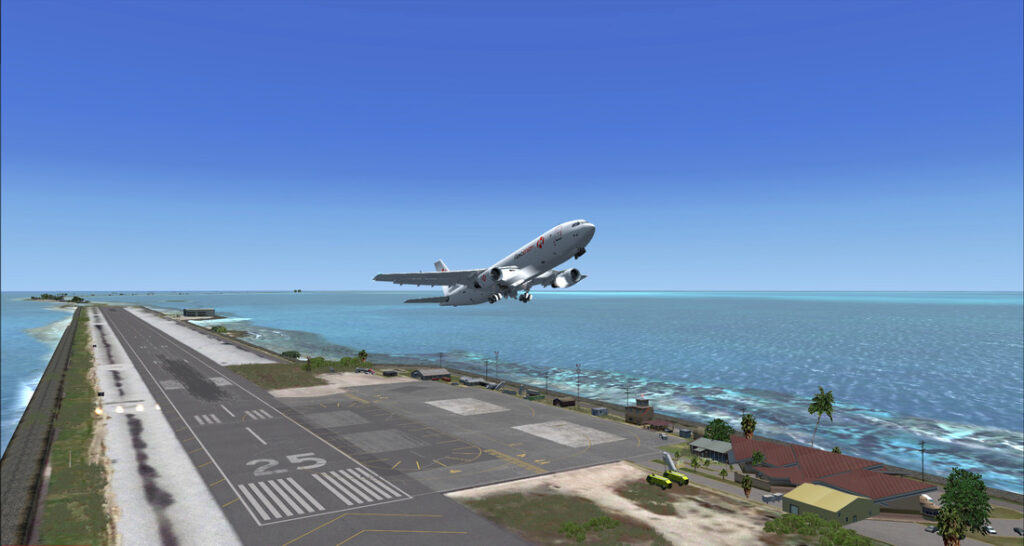
Landing in Majuro is a visual thrill: the runway stretches across a narrow atoll, with the Pacific on one side and cars racing alongside on the other. Construction materials had to be imported from multiple countries to complete this slender strip of asphalt.
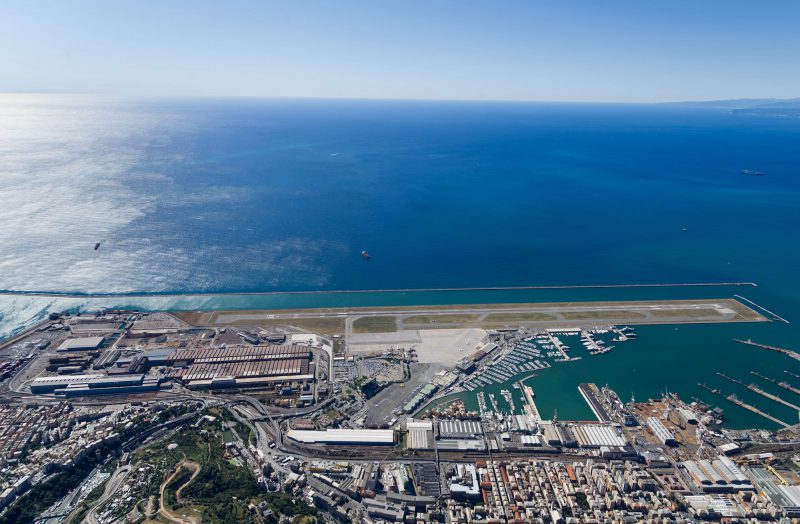
Genoa Cristoforo Colombo Airport, Italy (GOA)
Built on an artificial peninsula, Genoa Airport is squeezed between cliffs and the Mediterranean. The dramatic approach gives passengers the feeling of touching down on water before the runway appears.
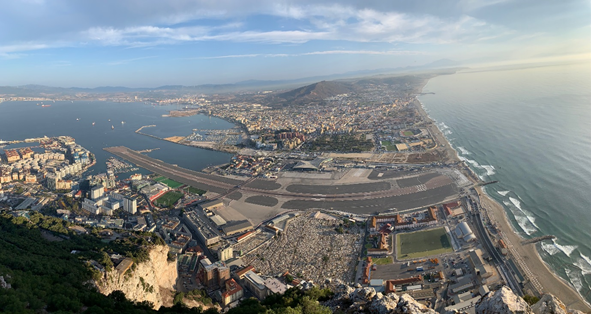
Gibraltar International Airport (GIB)
This runway doubles as a public road, one of the few in the world where pedestrians, cyclists, and scooters cross right before planes take off or land. It’s so famous that John Lennon and Yoko Ono posed here after their wedding.
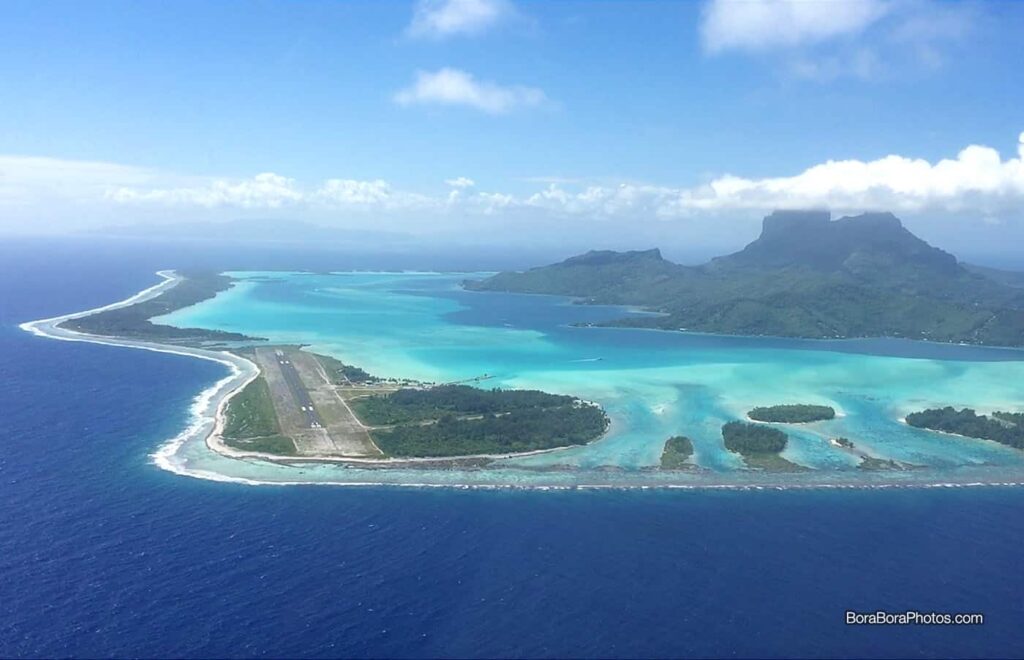
Bora Bora Airport, French Polynesia (BOB)
Constructed on a small motu in a lagoon, Bora Bora Airport requires a boat ride from the terminal to reach the main island. The runway extends across the island’s narrow strip of sand, creating a surreal landing over turquoise waters.
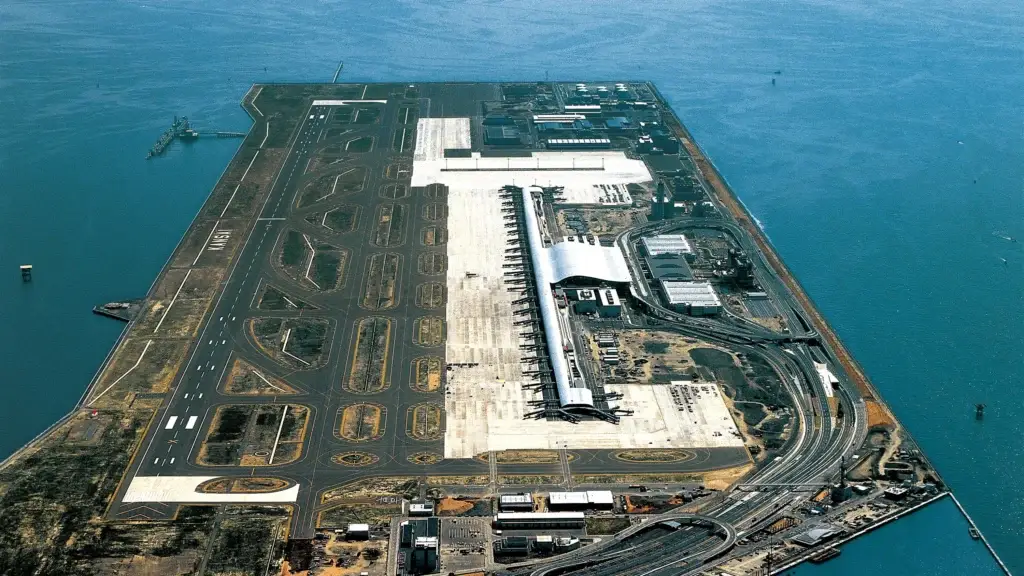
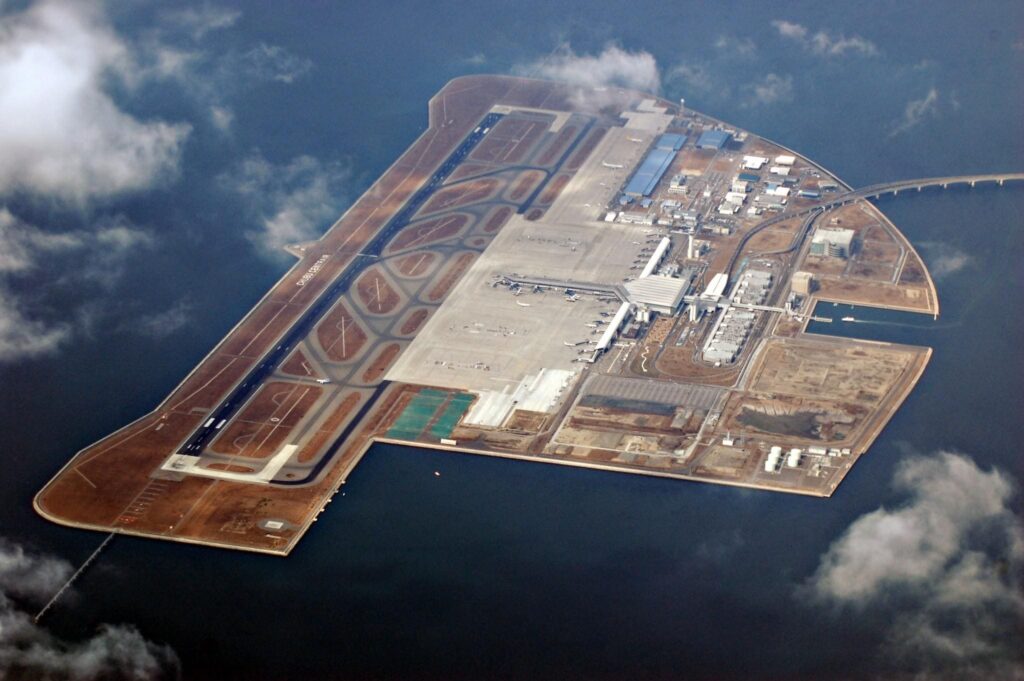
Kansai International Airport, Japan (KIX)
Osaka’s Kansai Airport sits on two conjoined manmade islands three miles offshore. Built on soft clay, the airport initially sank but stabilized over time. Its award-winning terminal, designed by Renzo Piano, features a Sky Deck, gardens, and play areas for children.
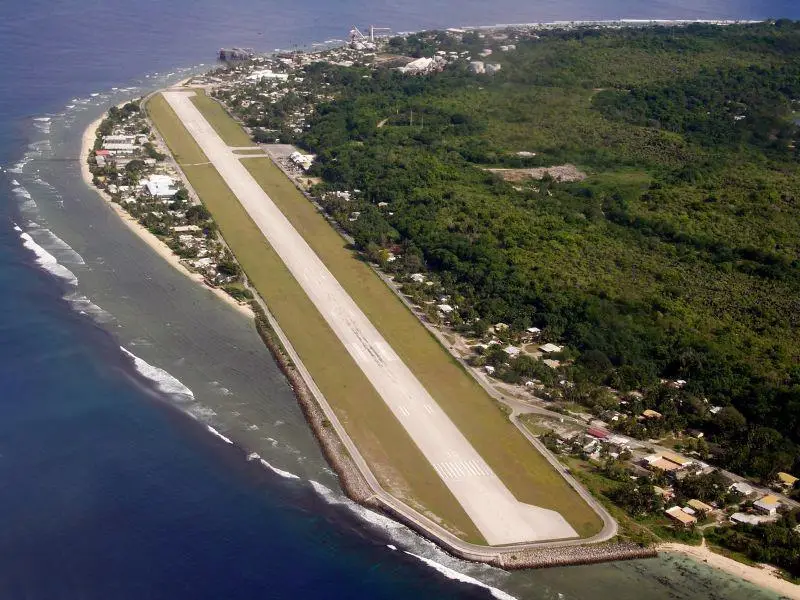
Nauru International Airport (INU)
Nauru’s tiny runway runs along the southwest coast of the island, flanked by the ocean and the capital city. Roads cross both ends of the runway, giving locals prime views of take-offs and landings.
Chubu Centrair International Airport (NGO), Japan
Opened in 2005 near Nagoya, Chubu sits on an artificial island. Construction involved stabilizing the seabed with sand compaction piles. The airport hosts an “aerial theme park” with a Boeing 787 on display next to a playground, merging aviation with family-friendly fun.
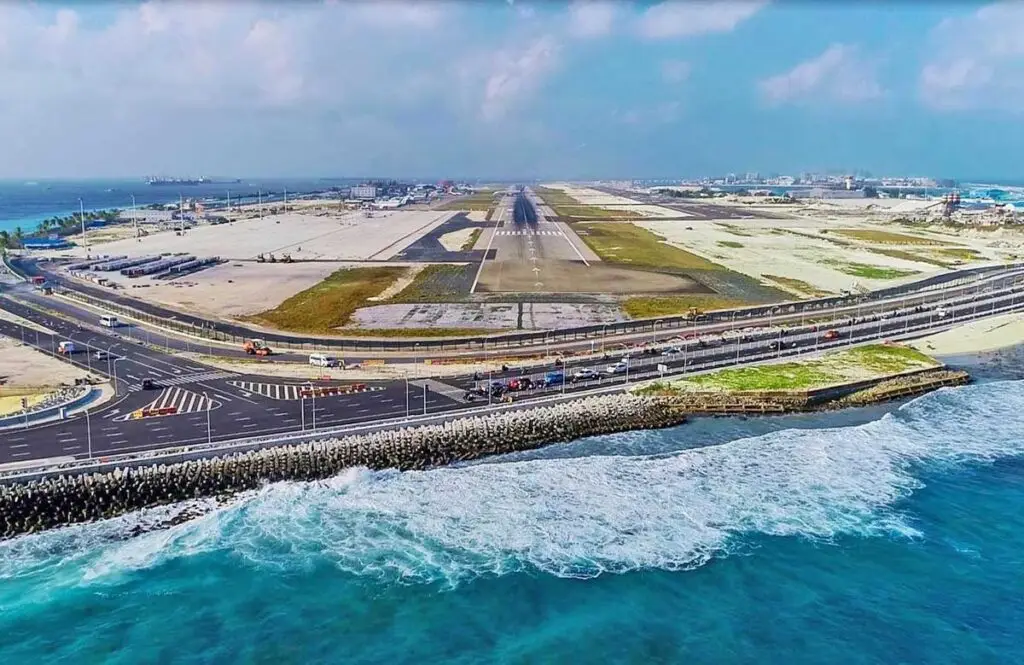
Velana International Airport (VIA), Maldives
Landing at Velana on Hulhulé Island offers spectacular views of the turquoise sea. The airport has one main runway and several water runways for seaplanes. The new passenger terminal opened recently, with the airport tripling its cargo capacity in 2024. A bridge connects the island to Malé, making this one of the world’s most scenic arrivals.
Resources:
https://www.google.com/
https://knowledgenexuses.com/